This site is for adults 18+ · Educational information only · Not medical advice
Warm line-art illustration of diverse South Asian adults sitting in a circle talking, fully clothed, educational and calm

Sexual education · India & diaspora · English first

Natural understanding.
Without shame.

Sahaj means natural. Bodh means understanding. Most people in India never get calm, factual sex education at home — research finds only about 8% learn from their parents, and many turn to porn instead. SahajBodh is a quiet place to learn what schools and families often skip.

Start learning Ask anonymously

Why this exists

Sexual health is part of overall health. The World Health Organization defines sexual health as a state of physical, emotional, mental and social well-being in relation to sexuality — not merely the absence of disease.[1]

In India, comprehensive sexuality education is uneven. A large survey reported that over 57% of respondents relied on pornography for sex education, while only about 8% said they learned from their parents.[2] That gap leaves room for myths, fear and unnecessary shame — in India and among diaspora communities in places like the Netherlands.

SahajBodh does not sell arousal, does not show nude imagery, and does not replace a doctor. It offers clear language, reliable sources, and a way to ask questions without showing your face or name.

Our promise: respectful tone, evidence-based facts, anonymous questions, and a clear line between education and entertainment.
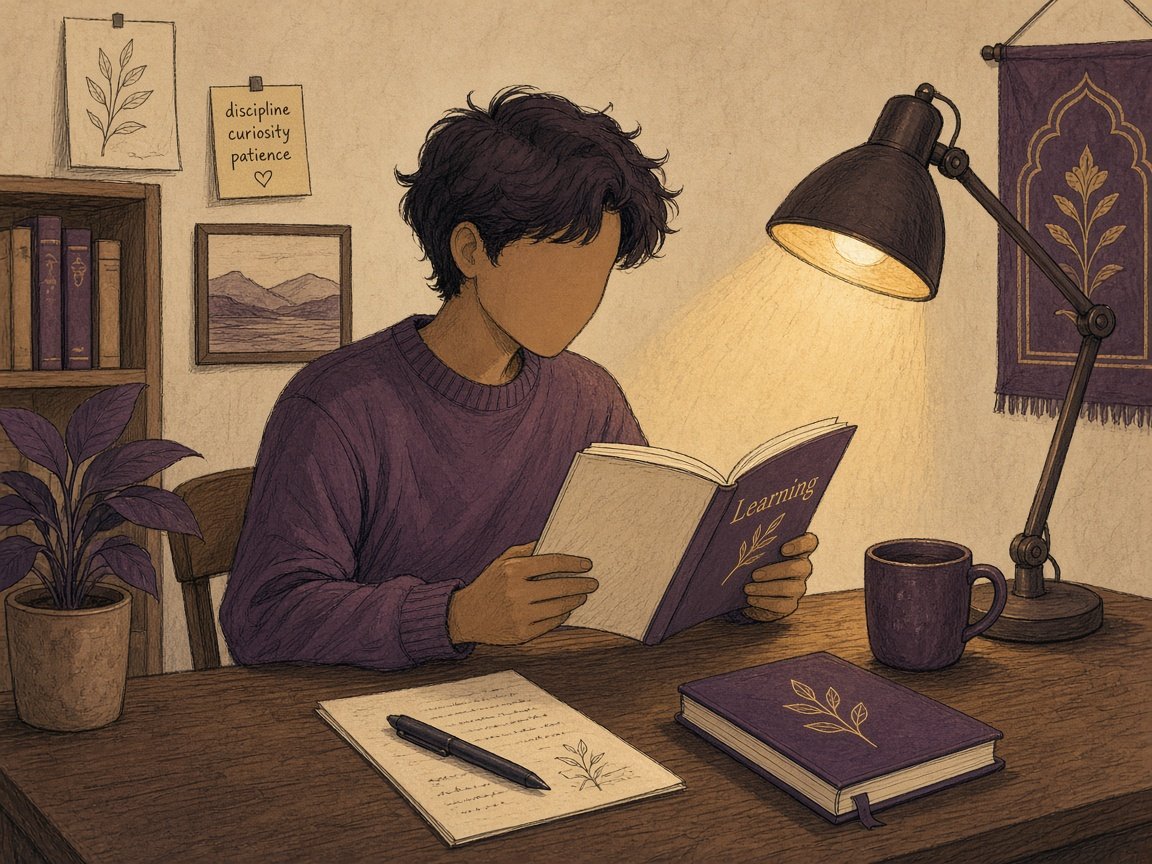
Line-art illustration of a South Asian adult reading a booklet titled Learning at a desk

Learning modules

Six short starters. Each is written for adults who want facts without judgement — whether you grew up in Mumbai, Chennai, Paramaribo or Amsterdam.

01 · Body

Body & anatomy

Bodies differ. Puberty, menstruation, ejaculation, menopause and pleasure are normal human processes. Knowing the correct names for body parts makes it easier to talk to a doctor and harder for myths to stick.

  • Reproductive systems are health systems, not moral judgements.
  • Pain, unusual discharge, or sudden changes deserve medical care — not silence.
  • Every body is different; porn is not a map of real anatomy.

Sources: NHS Sexual health, WHO Sexual health.

03 · Relationships

Relationships & communication
Line-art of two fully clothed South Asian adults talking over tea with empty speech bubbles

Healthy intimacy starts with words: boundaries, desires, contraceptives, testing, and what “no” looks like for you. Cultural respect and personal autonomy can sit side by side.

  • You can love your family and still set private boundaries.
  • Pressure, control or threats are not “care”.
  • Communication skills can be learned, just like any other skill.

Sources: UNFPA SRH, Love Matters India.

04 · Health

Contraception & sexual health
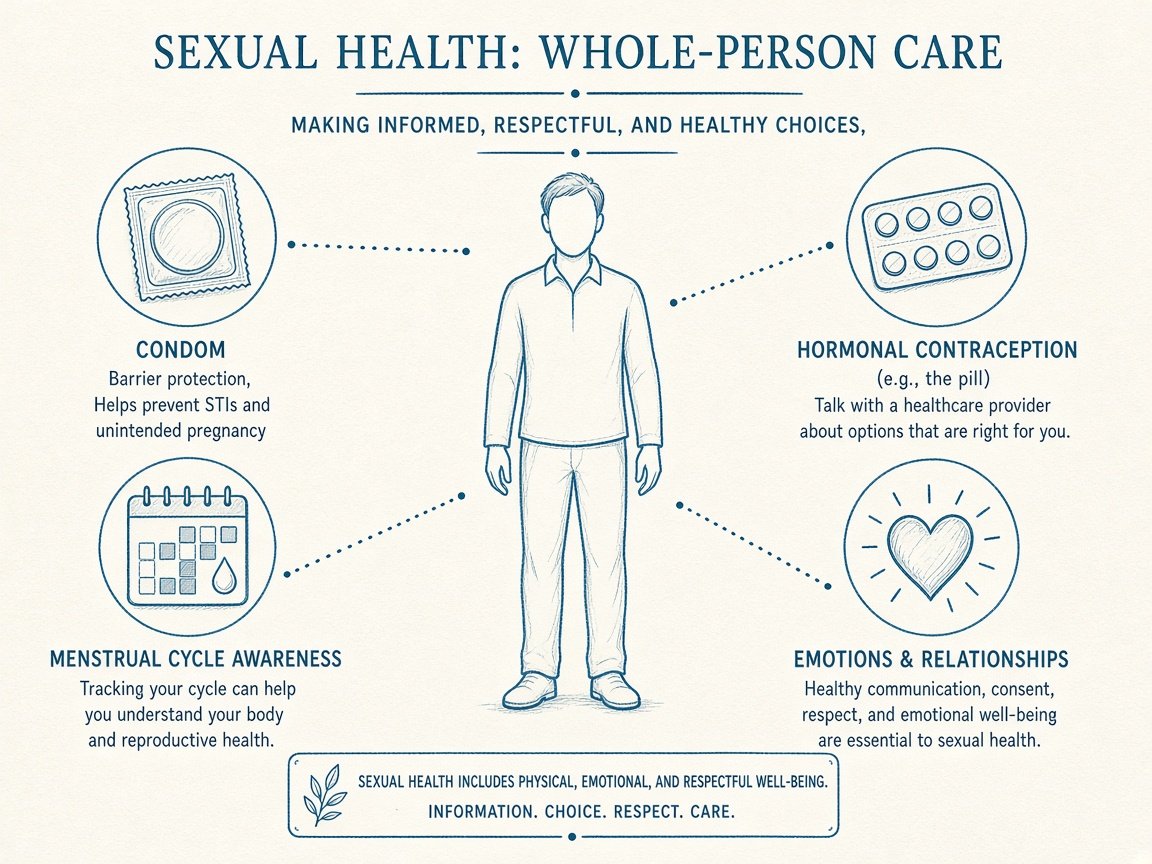
Clinical educational diagram about condoms, contraception, menstrual awareness and emotional wellbeing — fully clothed silhouette

Contraception prevents unintended pregnancy; condoms also reduce many sexually transmitted infections (STIs). Different methods suit different bodies and lives — a clinician can help you choose.

  • No method except abstinence is 100% perfect; combine wisely when needed.
  • Many STIs have mild or no symptoms — testing matters.
  • Emergency contraception exists; ask a pharmacist or doctor promptly.

Sources: WHO contraception, WHO STIs, NHS contraception, NHS STIs.

05 · Myths

Myths busted

Myth: “You can’t get pregnant the first time.”
Fact: Pregnancy is possible whenever sperm meets egg — including the first time.[6]
Myth: “If someone is married / in love, consent is automatic.”
Fact: Consent is needed every time, in every relationship.[4]
Myth: “Talking about sex corrupts young people.”
Fact: Good sexuality education is linked to delayed debut and safer behaviour, not earlier sex — that is why UN agencies promote comprehensive sexuality education.[4] [8]
Myth: “Indian culture has always been silent about desire.”
Fact: Classical Indian art and texts treated sexuality as part of life; modern silence is partly colonial and Victorian, not timeless tradition.[3]
Gap · India

The education gap

School programmes are often blocked or watered down as “against Indian values”, even though adolescents face real risks without information.[7] Diaspora families can face a second silence: new country, old taboos.

SahajBodh sits beside — not against — initiatives such as Agents of Ishq and Love Matters India, which already do brave public education work.
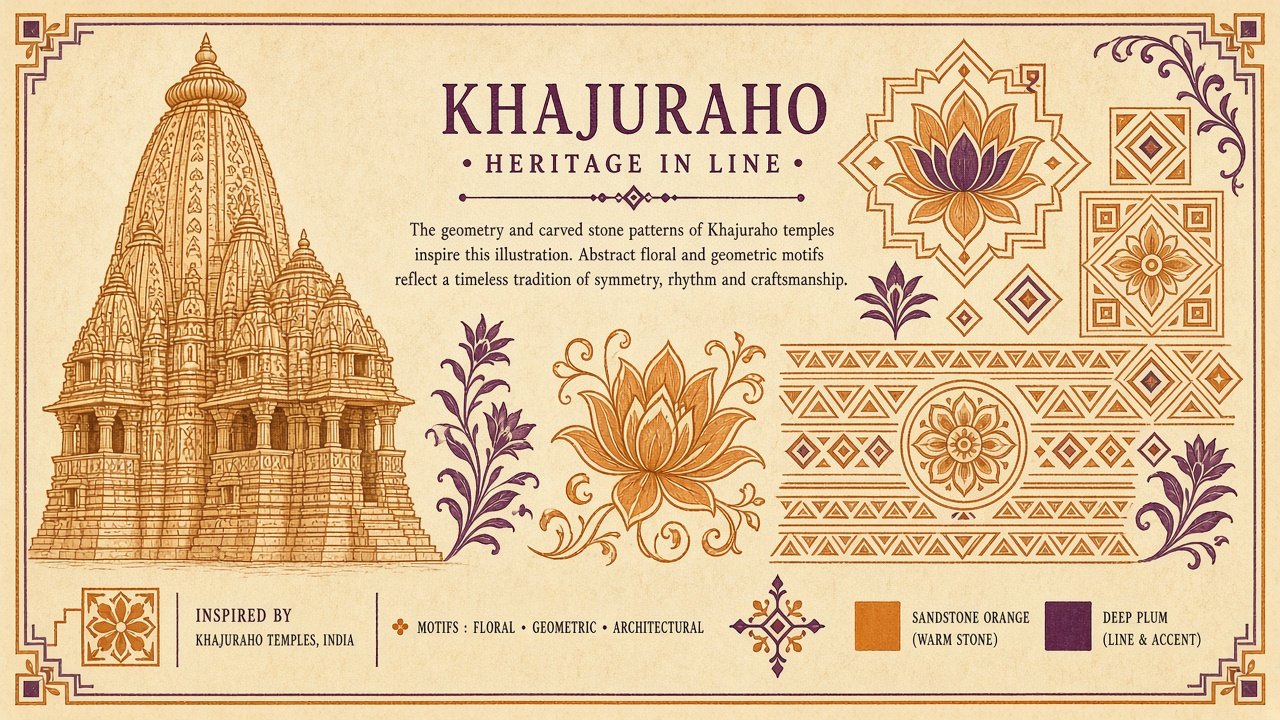
Abstract line illustration of Khajuraho temple architecture and geometric floral motifs — no human figures

Heritage: India’s open history

Long before today’s embarrassment, Indian civilisation produced the Kamasutra and temple art that treated desire as part of life, not only as sin. The temples of Khajuraho (Madhya Pradesh) are a UNESCO-recognised complex where carved stone includes everyday life, devotion and sensuality — a reminder that “Indian values” have never been one single rule.[3]

Remembering that history is not an excuse for harassment or pressure. It is a way to say: learning about bodies can be cultural, dignified and ours — not only Western, and not only pornographic.

  • Curiosity about the body is human, not foreign.
  • Art and education are not the same as exploitation.
  • You can honour elders and still choose informed adulthood.

Ask anonymously

Mailto placeholder — no data is stored on this site

Have a question you do not want attached to your name? Send it from any email address you prefer (including a throwaway). We will never publish your address. Answers may later appear as anonymous FAQs with personal details removed.

Opens your email app and sends to ask@sahajbodh.com (create this mailbox at Hostinger, or tell us another address). Nothing is saved in a database on this website.

Courses coming soon

Paid course packs will go deeper: Hindi–English modules on consent, contraception choices, talking with a partner, and parents who want better language for teens — without porn, without shame.

Join the waitlist and we will email you when the first pack opens. Pricing will stay accessible (think of a modest one-time fee, not a streaming subscription).

Mailto placeholder to hello@sahajbodh.com. No account is created on this site.

Course pack ideas

Consent in everyday life · Contraception without panic · Talking across generations · Diaspora dating & boundaries · STI basics for first clinic visits

How we will earn (later)

Paid self-paced packs, NGO/B2B workshops, and fitting sponsorships. Not ads that track you. Not nude imagery. Payment partners must allow educational content — we design for that from day one.

For organisations

NGOs, universities, HR teams and community groups can book shame-free workshops (online or in person) on consent, workplace respect, and parent–teen conversations. Inspired by public-education models like Agents of Ishq and Love Matters — adapted for bilingual, diaspora-aware settings.

Mailto placeholder to partners@sahajbodh.com.

Sources

  1. WHO — Sexual health
  2. The News Minute — survey on porn as sex education in India
  3. BBC Travel — India’s temples of sex (Khajuraho)
  4. UNFPA — Comprehensive sexuality education
  5. WHO — STI fact sheet
  6. NHS — Contraception
  7. PMC — sexuality education challenges in India
  8. UNESCO/WHO — International technical guidance on sexuality education
  9. WHO — Family planning / contraception
  10. UNFPA — Sexual & reproductive health
  11. NHS — Live Well: sexual health
  12. Agents of Ishq
  13. Love Matters India